

Choosing a Microwave Oven Builtin
A built-in microwave could be an ideal option if you're bored of freestanding models taking up space on the worktop. They are designed to fit into cabinets, and certain models can be mounted flush to create a seamless look.
While features like pre-programmed settings and sensor cooking are helpful however, you should only select one that has features you will actually use. Don't forget to consider the cost of installation, which should be completed by professionals.
Size
To ensure you select the correct model for your space, you should think about the size of your cabinet and the kitchen when deciding on a built-in microwave. Microwaves are available in standard cabinet sizes of 24, 27, and 30 inches. You should also consider the capacity, as this will determine the amount of a meal it is possible to cook at one time.
Cost is a crucial aspect to take into consideration when selecting the right microwave. Prices for microwaves vary depending on their size, features, and the brand you choose. In addition to the price of the appliance, you'll also have installation costs to consider. Freestanding microwaves are cheaper to buy and install, since they can be put on the counter.
Power
The cooking power of a microwave (wattage), determines how quickly and efficiently your food will be cooked. Higher wattages tend to cook faster, but less expensive models can still fulfill the majority of your needs. We recommend choosing a model that has at least 1,000 watts. integrated microwave with lower wattage may cook unevenly, and may take longer to warm food than microwaves with a higher wattage.
Check the user manual of your microwave or the serial number plate on the inside. You can also examine the wattage of different models to help you choose the best one for your household needs.
There are microwaves that are designed to be placed inside cabinetry or even placed on a wall for an integrated look. Some of them feature high-end features that give an exquisite finish and feel. There are countertop microwaves with integrated installation kits to make space in your kitchen and create a custom look.
A microwave with an integrated oven may appear more sleek, but you'll pay more for this option of installation compared to other models. These models are harder to replace or repair if they fail and you'll need to pay someone to install them. On the other hand, countertop and over-the-range microwaves don't need any installation fees. However, you'll still have to ensure that the microwave you select fits in the spot you're planning to use it. You'll need to determine the space to ensure that you can locate a microwave with a usable capacity that is compatible with your requirements. The greater the power you require, the larger the microwave will need to be in order to accommodate your food items.
Convection
A microwave oven that has convection capabilities allows you to bake or brown food items in addition to reheating and defrosting. The microwave oven's heating element and the fan combine to circulate hot air around food in the microwave oven, similar to oven roasters, which allows the appliance to cook food more evenly than traditional microwaves.
The magnetron in the oven emits microwave radiation that heats and cooks the food. Microwaves are electromagnetic radiation that is not ionizing, and have been shown not to cause cancer in rodent studies that have been conducted over a long period of time. Unlike conventional ovens that produce high-energy radiation that could cause burns, the microwaves generated by microwave ovens are emitted by the door of the oven, and do not pose the risk of injury to anyone.
Uneven heating in a microwaved dish can be caused by the different rates of energy absorption by different components of the food, as well through vibration. This problem can be addressed by stirring the food or by using a a rotating turntable that turns the dish while it cooks.
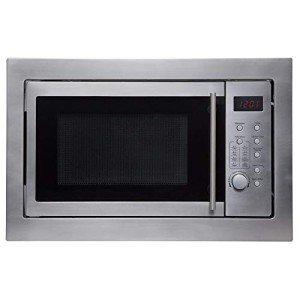
Some built-in microwaves are designed to fit in the kitchen cabinet to provide an attractive appearance and simple access. Trim kits are available for these models to cover any gaps that might exist between the microwave and cabinet. This will give the microwave a seamless appearance. Other models are countertop models that are placed on countertops in kitchens and plug directly into a power outlet. A countertop model is an excellent alternative to a countertop microwave or oven. Some countertop models have an open drawer that can be closed and opened by pressing the button to make it easier for accessibility.
Controls
A built-in microwave will save you counter space by eliminating the need for an additional appliance. It can be installed in a cabinet or attached to the wall for an aesthetically pleasing kitchen. Selecting the proper size, power, and features is important to suit your family's cooking requirements.
The controls of the built-in microwave may differ however, they typically contain an LCD or LED display that can be used to show cooking results and program and buttons to select the desired cook time, and a defrost feature. Some models have a sensor to automatically detect and defrost food items with just the touch of a button. A timer, key lock and safety interlock prevent accidental or unwanted operation.
Certain manufacturers offer models with touch screens for added convenience. Some come with finishes such as stainless steel with PrintShieldTM that resists fingerprints and smudges. A microwave with a dishwasher-safe tray makes cleanup simpler.
Microwave ovens utilize electromagnetic waves that have a short wavelength to cook food by directly causing vibrations to molecules inside the cooking cavity. The technology was developed following World War II using radar technology, which was employed during the conflict. The radiation released by the microwave isn't harmful and doesn't pose a health risk when the oven's door is closed and latched properly.
Built-in Microwaves built-in microwave can be used to replace the countertop or undercounter model, and is also installed in a wall or over-the range oven. The installation of the appliance should be done by professionals. It might be necessary to replace a cabinet panel to accommodate the new appliance, based on the space available. It is also important to consider whether the cabinetry you have already installed is able to take on the airflow and noise that a microwave might generate.
Style
Built-in microwaves can be a great alternative to traditional countertop microwaves. While they sit on your counter and models that are over-the-range sit just above your stove Built-ins are built into your cabinetry. This provides them with a more modern appearance. They are available in a variety of installation styles including a flush mount and slide-out drawers that allow you to put them at a suitable height for your family, and provide an easy transition into your kitchen. These microwave types also offer higher-end features to give an elegant feel.
When weighing your options, it is important to think about how often you utilize the features of a microwave, and if they're compatible with your everyday cooking routine. Defrost and pre-programmed options can simplify cooking for busy families. However, you must consider whether they are useful or merely replace manual steps.
Certain manufacturers have also played with combination microwave-ranges which combine a traditional oven with microwave capabilities. These units are a good choice for households who frequently use microwave and conventional heat sources, but have limited counter space.
It's important to check local codes and regulations, no matter the model you select, prior to installing a microwave in your home. You may require a permit or installation assistance from a professional especially if you require ductwork. Lastly, you'll need to ensure that there is enough ventilation in the area where you plan on installing the microwave. Venting systems can help ensure the appliance operates safely and reduces the risk of carbon monoxide poisoning.